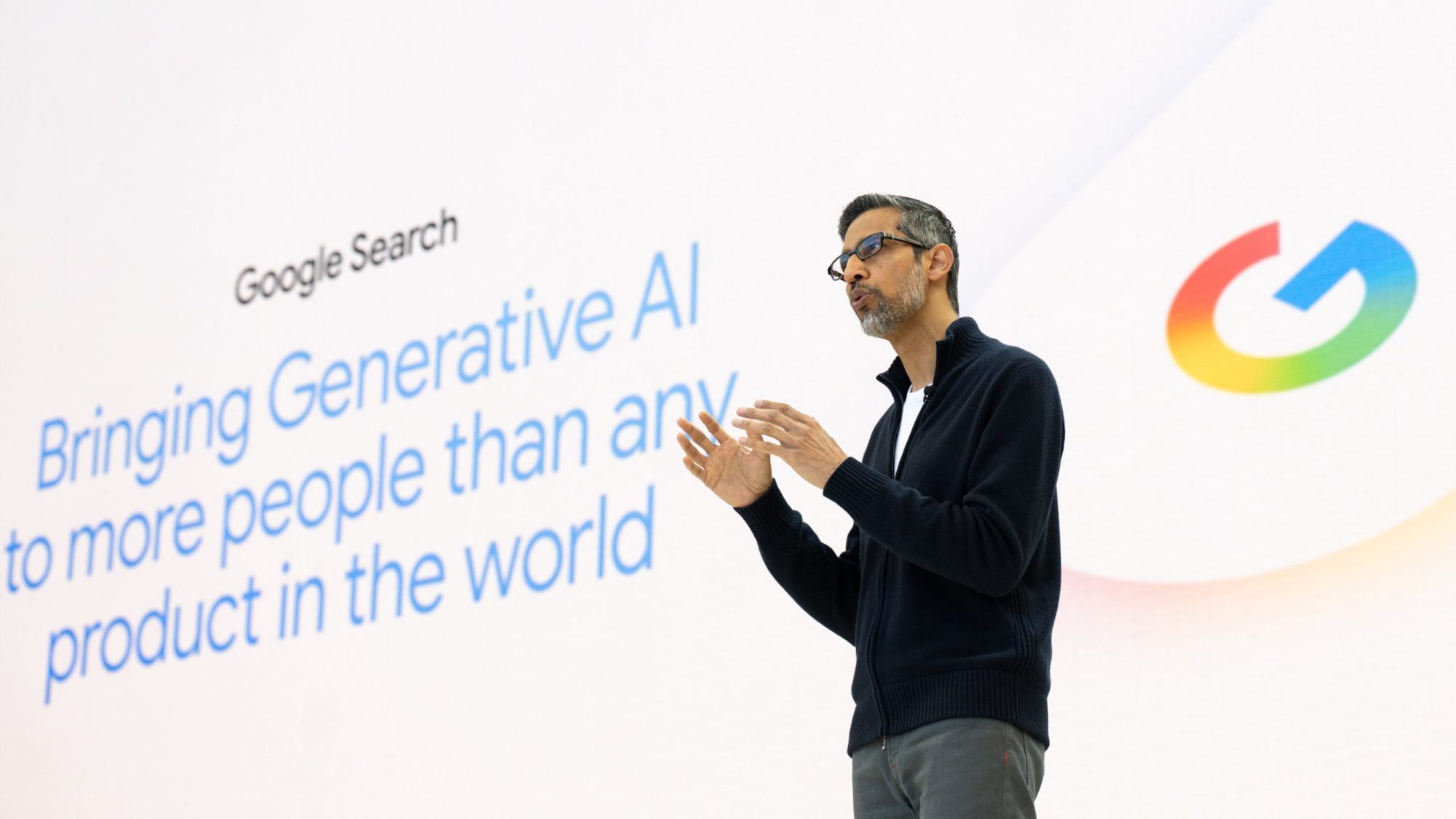
In today’s digital world, keywords and trends play a crucial role in shaping online visibility, content strategy, and marketing performance. With the rapid advancements in artificial intelligence—especially those driven by Google—businesses, creators, and marketers now have access to more powerful tools for understanding user behavior and predicting market shifts. The term “Google AI News” has become one of the most followed topics in the technology industry, as Google continues to release innovations that directly influence how we search, create content, and optimize websites.

This article explores the importance of keyword information, how trends evolve, and the major developments in Google’s AI ecosystem. Understanding these elements is essential for anyone who wants to stay competitive in SEO, digital marketing, or content production.
1. The Importance of Keyword Information in the AI Era
Keywords remain the foundation of search engine optimization, even as Google introduces more advanced AI systems. However, the way keywords work has changed. Google no longer relies only on exact-match words; it now understands meaning, context, intent, and language relationships.
1.1 Understanding Search Intent
Search intent is the goal behind a user’s query. For example:
- “Google AI news” → informational intent
- “Google AI tools for business” → transactional or research intent
Google’s AI models—particularly Gemini and Search Generative Experience (SGE)—analyze billions of search patterns to predict what users actually want. This means content creators must focus on answering questions clearly and providing in-depth information rather than stuffing keywords unnaturally.
1.2 Keyword Clusters and Topic Authority
AI encourages creating content around topics, not just single keywords. This involves:
- Creating clusters of related keywords
- Developing pillar pages and support articles
- Demonstrating expertise and authority
For example, around the keyword “Google AI news”, a complete SEO strategy could include:
- Google AI updates
- New Gemini features
- AI search trend predictions
- Google’s role in global AI development
This structured approach improves ranking and helps Google identify your site as a trusted source.
2. Trends Shaping Keyword Research in 2025
The digital landscape has become highly dynamic. AI affects everything—from how users search to how search engines display results. Here are the major keyword trends dominating 2025.
2.1 AI-Generated Search Results (SGE)
Google’s Search Generative Experience is transforming search results. Users can now:
- Receive generated summaries
- Get instant answers
- View AI-curated recommendations
- Explore multiple viewpoints automatically
As a result, long-tail keywords are becoming more valuable, since the AI segments information into precise topics. Marketers now need to optimize their content not only for traditional pages but also for AI-powered snippets.
2.2 The Rise of Conversational Queries
Voice search and AI assistants (like Gemini, Bard, Siri, Alexa, and others) have pushed users toward natural and conversational queries, such as:
- “What’s the latest Google AI update today?”
- “How is Google AI changing marketing?”
- “What Google AI tools help with content creation?”
These conversational keywords require more natural, human-like content writing.
2.3 Real-Time Trending Keywords
Google’s AI constantly analyzes global conversations—from social media to news articles—and updates its trend data every few minutes. The “Google AI News” keyword itself is highly dynamic because of:
- New product releases
- Policy changes
- AI safety debates
- Breakthrough announcements
To follow these trends, marketers use tools like Google Trends, Search Console, and Gemini’s built-in insights dashboard.
3. What’s New in Google AI: Key Developments in 2025
The year 2025 has been significant for Google’s AI ecosystem. Here are the most impactful updates shaping the industry.
3.1 Gemini: A More Powerful Multimodal AI
Google’s flagship model, Gemini, continues to evolve, offering:
- Real-time search integration
- Advanced reasoning capabilities
- High-quality content generation
- Multimodal understanding (text, audio, images, code, data)
Gemini’s integration across Android, Chrome, Gmail, YouTube, and Google Search marks a shift toward a unified intelligent ecosystem.
3.2 AI in Search Optimization
Google’s algorithm increasingly depends on AI to:
- Rank content
- Detect spam
- Understand context and tone
- Predict user satisfaction
- Personalize results
This means SEO is becoming more quality-driven. Google favors content that is:
- Helpful
- Well-researched
- User-intent-focused
- Authentically written
Simply adding keywords is no longer enough.
3.3 AI Safety and Regulation
Google has introduced new safety layers in response to global regulation on AI. These include:
- AI-generated content labels
- Synthetic media detection
- Data transparency tools
- Built-in bias and toxicity filters
These updates influence how content is ranked and how users interact with search results.
3.4 AI Tools for Businesses
Google has expanded its suite of AI business tools, including:
- AI-powered Google Analytics insights
- AI-generated ads in Google Ads
- Automated content briefs
- Enhanced e-commerce product ranking
- Smart email and document generation in Workspace
These tools help businesses make smarter, data-driven decisions.
4. How to Use “Google AI News” as a Strategic Keyword
Given the high competition and popularity of this keyword, here are best practices to optimize content around it.
4.1 Combine High-Volume and Long-Tail Keywords
Examples:
- Google AI News
- Latest Google AI trends
- Google Gemini updates 2025
- Google AI new features
- Impact of Google AI on SEO
Long-tail keywords help target specific audiences and improve organic ranking.
4.2 Create Fresh, Updated Content
Because AI evolves fast, outdated articles quickly lose value. Search engines reward sites that regularly update their content with new data and insights.
4.3 Offer Deep, Analytical Perspectives
Google increasingly rewards content that is:
- Analytical
- Expert-level
- Well-structured
- Data-based
This is especially important when writing about fast-moving topics like AI.
4.4 Use Multimedia Content
Google AI tools prefer rich content that includes:
- Charts
- Infographics
- Video summaries
- Interactive elements
This improves both ranking and user engagement.
Conclusion
The world of AI and keyword trends is changing rapidly, with Google leading the transformation. Understanding how keywords work today—and how AI influences search behavior—is essential for any business or content creator who wants to stay competitive.
The keyword “Google AI News” continues to shape global conversations, reflecting the speed at which technology evolves. By mastering keyword information, staying updated on trends, and adapting to Google’s AI-powered ecosystem, you can build stronger content strategies, improve SEO performance, and reach a wider audience in 2025 and beyond.